July 2025: A Study of Hosea 7-10

Hosea 7

1 whenever I would heal Israel,

the sins of Ephraim are exposed

    and the crimes of Samaria revealed.

They practice deceit,

    thieves break into houses,

    bandits rob in the streets;

2 but they do not realize

    that I remember all their evil deeds.

Their sins engulf them;

    they are always before me.

3 “They delight the king with their wickedness,

    the princes with their lies.

4 They are all adulterers,

    burning like an oven

whose fire the baker need not stir

    from the kneading of the dough till it rises.

5 On the day of the festival of our king

    the princes become inflamed with wine,

    and he joins hands with the mockers.

6 Their hearts are like an oven;

    they approach him with intrigue.

Their passion smolders all night;

    in the morning it blazes like a flaming fire.

7 All of them are hot as an oven;

    they devour their rulers.

All their kings fall,

    and none of them calls on me.

8 “Ephraim mixes with the nations;

    Ephraim is a flat loaf not turned over.

9 Foreigners sap his strength,

    but he does not realize it.

His hair is sprinkled with gray,

    but he does not notice.

10 Israel’s arrogance testifies against him,

    but despite all this

he does not return to the Lord his God

    or search for him.

11 Ephraim is like a dove,

    easily deceived and senseless—

now calling to Egypt,

    now turning to Assyria.

12 When they go, I will throw my net over them;

    I will pull them down like the birds in the sky.

When I hear them flocking together,

    I will catch them.

13 Woe to them,

    because they have strayed from me!

Destruction to them,

    because they have rebelled against me!

I long to redeem them

    but they speak about me falsely.

14 They do not cry out to me from their hearts

    but wail on their beds.

They slash themselves, appealing to their gods

    for grain and new wine,

    but they turn away from me.

15 I trained them and strengthened their arms,

    but they plot evil against me.

16 They do not turn to the Most High;

they are like a faulty bow.

Their leaders will fall by the sword

    because of their insolent words.

For this they will be ridiculed

    in the land of Egypt.

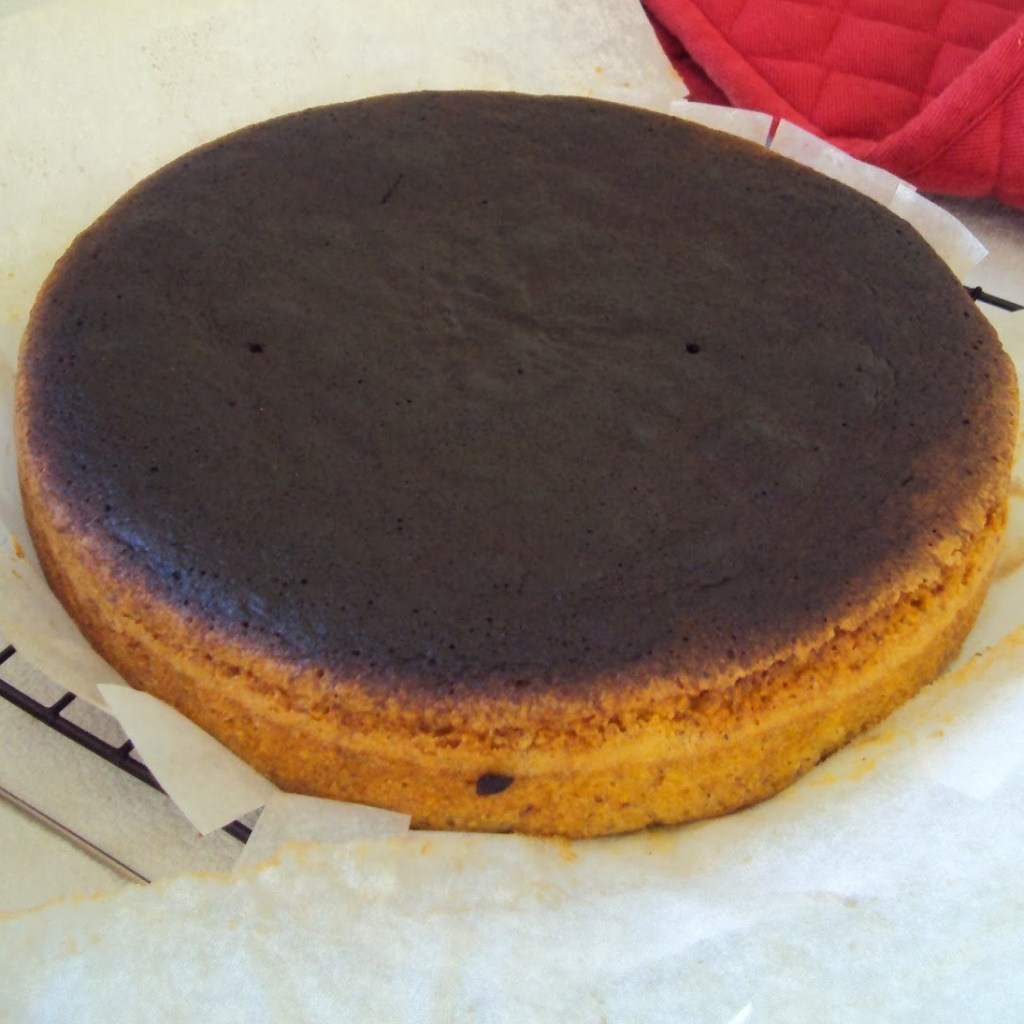
Israel seemed to think that their disobedience and numerous sins were overlooked by God. Their hearts were consumed by wicked desires, and despite facing various trials, they neglected to seek divine help. They were like a poorly baked cake—partly burnt and partly raw—unfit for consumption, representing a mix of idolatry and the worship of Jehovah. While they might have voiced their fears in prayer, their cries often lacked sincerity. Even their requests for worldly blessings were merely attempts to fulfill their own desires. Their constant oscillation between different beliefs and vices distanced them from God and true holiness. This mirrors our own nature, and without divine intervention, we would remain in such a state. Create in us a clean heart, O God, and renew a right spirit within us.
Hosea 8

Israel to Reap the Whirlwind

8 “Put the trumpet to your lips!

    An eagle is over the house of the Lord

because the people have broken my covenant

    and rebelled against my law.

2 Israel cries out to me,

    ‘Our God, we acknowledge you!’

3 But Israel has rejected what is good;

    an enemy will pursue him.

4 They set up kings without my consent;

    they choose princes without my approval.

With their silver and gold

    they make idols for themselves

    to their own destruction.

5 Samaria, throw out your calf-idol!

    My anger burns against them.

How long will they be incapable of purity?

6     They are from Israel!

This calf—a metalworker has made it;

    it is not God.

It will be broken in pieces,

    that calf of Samaria.

7 “They sow the wind

    and reap the whirlwind.

The stalk has no head;

    it will produce no flour.

Were it to yield grain,

    foreigners would swallow it up.

8 Israel is swallowed up;

    now she is among the nations

    like something no one wants.

9 For they have gone up to Assyria

    like a wild donkey wandering alone.

    Ephraim has sold herself to lovers.

10 Although they have sold themselves among the nations,

    I will now gather them together.

They will begin to waste away

    under the oppression of the mighty king.

11 “Though Ephraim built many altars for sin offerings,

    these have become altars for sinning.

12 I wrote for them the many things of my law,

    but they regarded them as something foreign.

13 Though they offer sacrifices as gifts to me,

    and though they eat the meat,

    the Lord is not pleased with them.

Now he will remember their wickedness

    and punish their sins:

    They will return to Egypt.

14 Israel has forgotten their Maker

    and built palaces;

    Judah has fortified many towns.

But I will send fire on their cities

    that will consume their fortresses.”

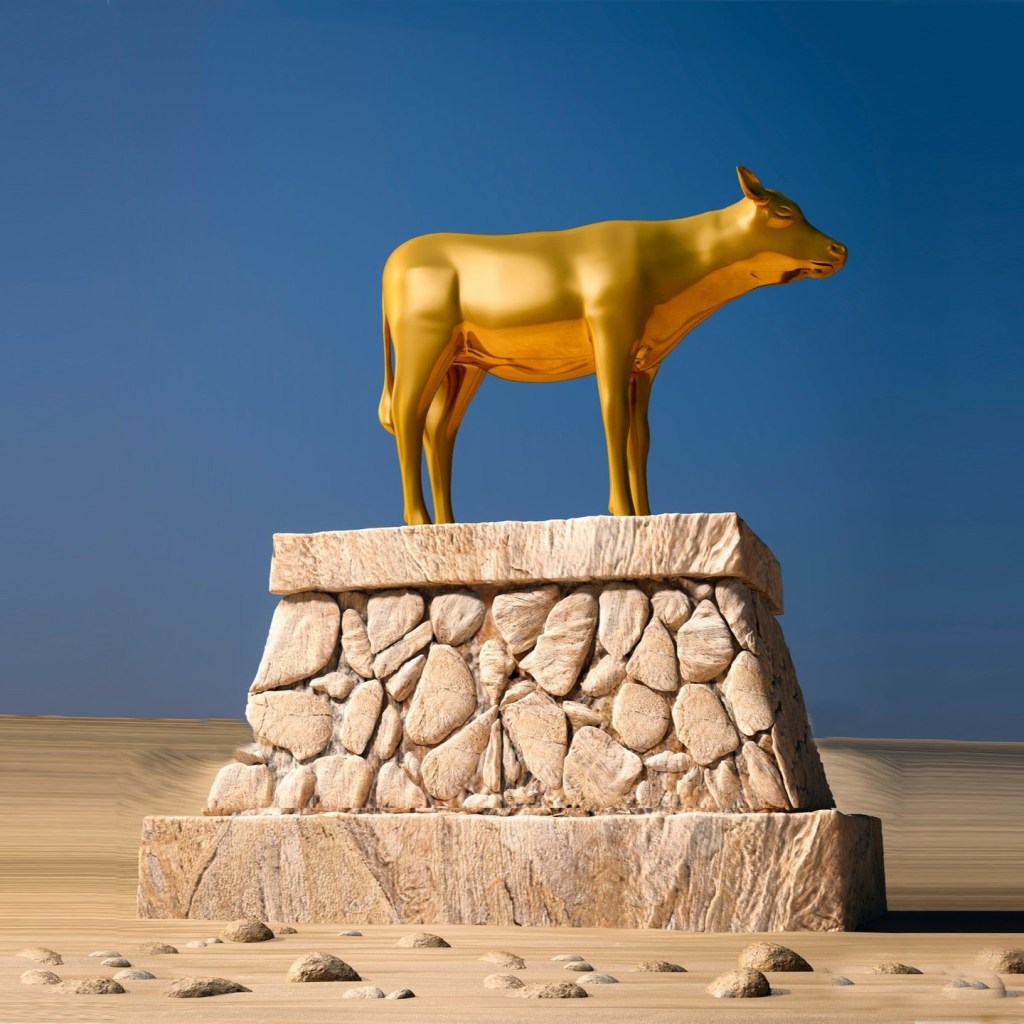
Calf worship was a recurring issue for Israel, originating with Moses and Aaron and persisting whenever the opportunity arose. The futility of such idolatry is poignantly illustrated by the notion of sowing the wind and reaping the whirlwind. Despite their attempts to appease God through sacrifices, He perceives their hearts and recognizes that their love for Him falls short of His desires. Israel mistakenly believed they could earn God’s favor through grand gestures, neglecting the importance of a genuine relationship. Instead of seeking closeness with God, they fortified their cities and relied on human strength, ultimately leading to their downfall. This pattern resonates today, as God seeks a relational bond rather than mere adherence to rituals or good deeds in place of authentic connection.
Hosea 9

Punishment for Israel

9 Do not rejoice, Israel;

    do not be jubilant like the other nations.

For you have been unfaithful to your God;

    you love the wages of a prostitute

    at every threshing floor.

2 Threshing floors and winepresses will not feed the people;

    the new wine will fail them.

3 They will not remain in the Lord’s land;

    Ephraim will return to Egypt

    and eat unclean food in Assyria.

4 They will not pour out wine offerings to the Lord,

    nor will their sacrifices please him.

Such sacrifices will be to them like the bread of mourners;

    all who eat them will be unclean.

This food will be for themselves;

    it will not come into the temple of the Lord.

5 What will you do on the day of your appointed festivals,

    on the feast days of the Lord?

6 Even if they escape from destruction,

    Egypt will gather them,

    and Memphis will bury them.

Their treasures of silver will be taken over by briers,

    and thorns will overrun their tents.

7 The days of punishment are coming,

    the days of reckoning are at hand.

    Let Israel know this.

Because your sins are so many

    and your hostility so great,

the prophet is considered a fool,

    the inspired person a maniac.

8 The prophet, along with my God,

    is the watchman over Ephraim,[a]

yet snares await him on all his paths,

    and hostility in the house of his God.

9 They have sunk deep into corruption,

    as in the days of Gibeah.

God will remember their wickedness

    and punish them for their sins.

10 “When I found Israel,

    it was like finding grapes in the desert;

when I saw your ancestors,

    it was like seeing the early fruit on the fig tree.

But when they came to Baal Peor,

    they consecrated themselves to that shameful idol

    and became as vile as the thing they loved.

11 Ephraim’s glory will fly away like a bird—

    no birth, no pregnancy, no conception.

12 Even if they rear children,

    I will bereave them of every one.

Woe to them

    when I turn away from them!

13 I have seen Ephraim, like Tyre,

    planted in a pleasant place.

But Ephraim will bring out

    their children to the slayer.”

14 Give them, Lord—

    what will you give them?

Give them wombs that miscarry

    and breasts that are dry.

15 “Because of all their wickedness in Gilgal,

    I hated them there.

Because of their sinful deeds,

    I will drive them out of my house.

I will no longer love them;

    all their leaders are rebellious.

16 Ephraim is blighted,

    their root is withered,

    they yield no fruit.

Even if they bear children,

    I will slay their cherished offspring.”

17 My God will reject them

    because they have not obeyed him;

    they will be wanderers among the nations.

In this chapter, we explore the five major repercussions that Israel will face as a result of God’s rejection. These include a profound loss of joy, exile from their homeland, a decline in spiritual insight, decreasing birth rates, and a pervasive sense of abandonment by God. Hosea warns that divine blessings, especially the gift of children, will be withheld from them. Additionally, the text highlights how times of prosperity, such as plentiful harvests, can lead to spiritual decay, as evidenced by the Israelites’ involvement in temple prostitution with the Assyrians, where they sought physical pleasure in hopes of ensuring bountiful agricultural yields.
Hosea 10

10 Israel was a spreading vine;

    he brought forth fruit for himself.

As his fruit increased,

    he built more altars;

as his land prospered,

    he adorned his sacred stones.

2 Their heart is deceitful,

    and now they must bear their guilt.

The Lord will demolish their altars

    and destroy their sacred stones.

3 Then they will say, “We have no king

    because we did not revere the Lord.

But even if we had a king,

    what could he do for us?”

4 They make many promises,

    take false oaths

    and make agreements;

therefore lawsuits spring up

    like poisonous weeds in a plowed field.

5 The people who live in Samaria fear

    for the calf-idol of Beth Aven.

Its people will mourn over it,

    and so will its idolatrous priests,

those who had rejoiced over its splendor,

    because it is taken from them into exile.

6 It will be carried to Assyria

    as tribute for the great king.

Ephraim will be disgraced;

    Israel will be ashamed of its foreign alliances.

7 Samaria’s king will be destroyed,

    swept away like a twig on the surface of the waters.

8 The high places of wickedness will be destroyed—

    it is the sin of Israel.

Thorns and thistles will grow up

    and cover their altars.

Then they will say to the mountains, “Cover us!”

    and to the hills, “Fall on us!”

9 “Since the days of Gibeah, you have sinned, Israel,

    and there you have remained.

Will not war again overtake

    the evildoers in Gibeah?

10 When I please, I will punish them;

    nations will be gathered against them

    to put them in bonds for their double sin.

11 Ephraim is a trained heifer

    that loves to thresh;

so I will put a yoke

    on her fair neck.

I will drive Ephraim,

    Judah must plow,

    and Jacob must break up the ground.

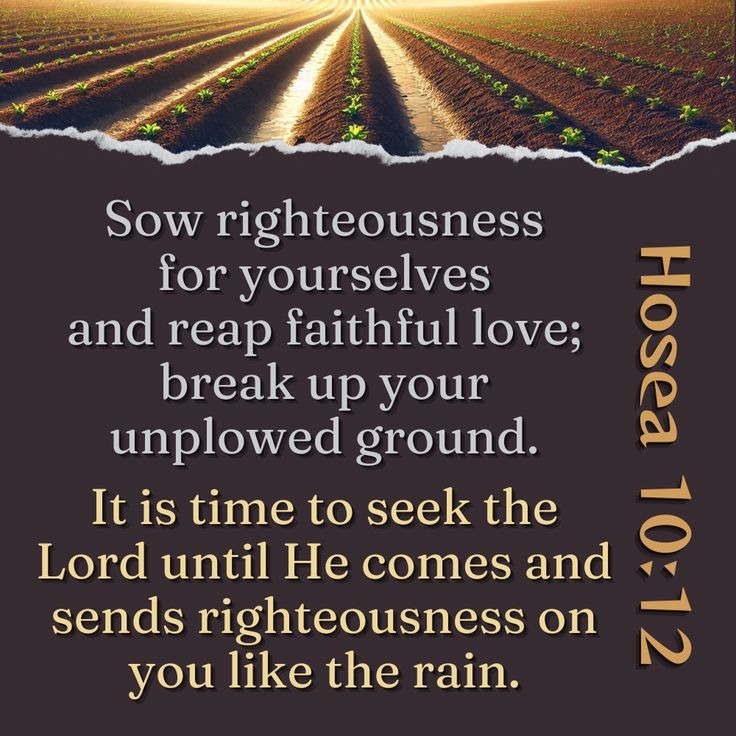
12 Sow righteousness for yourselves,

    reap the fruit of unfailing love,

and break up your unplowed ground;

    for it is time to seek the Lord,

until he comes

    and showers his righteousness on you.

13 But you have planted wickedness,

    you have reaped evil,

    you have eaten the fruit of deception.

Because you have depended on your own strength

    and on your many warriors,

14 the roar of battle will rise against your people,

    so that all your fortresses will be devastated—

as Shalman devastated Beth Arbel on the day of battle,

    when mothers were dashed to the ground with their children.

15 So will it happen to you, Bethel,

    because your wickedness is great.

When that day dawns,

    the king of Israel will be completely destroyed.

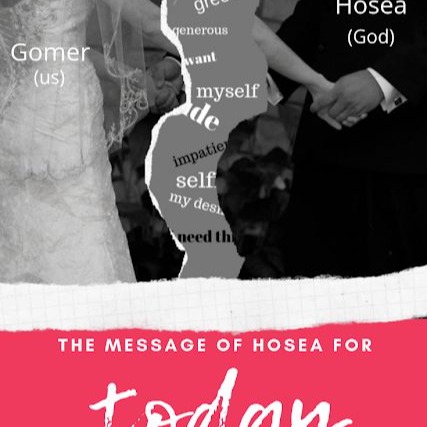
Israel has voiced its discontent over the absence of a king, pointing to the ineffectiveness and lack of respect for its last five leaders, which led the nation into turmoil. The Israelites became increasingly focused on seeking pleasure and comfort, neglecting their devotion to the true Lord. This situation reflects our modern society, where the pursuit of personal satisfaction often eclipses our commitment to God. Consequently, we may fail to recognize how much we prioritize our own desires over spiritual engagement.

Leave a comment

June 2025: A Study of Hosea 1-6

Hosea 1

1 The word of the Lord that came to Hosea son of Beeri during the reigns of Uzziah, Jotham, Ahaz and Hezekiah, kings of Judah, and during the reign of Jeroboam son of Jehoash king of Israel:

Hosea’s Wife and Children

2 When the Lord began to speak through Hosea, the Lord said to him, “Go, marry a promiscuous woman and have children with her, for like an adulterous wife this land is guilty of unfaithfulness to the Lord.” 3 So he married Gomer daughter of Diblaim, and she conceived and bore him a son.

4 Then the Lord said to Hosea, “Call him Jezreel, because I will soon punish the house of Jehu for the massacre at Jezreel, and I will put an end to the kingdom of Israel. 5 In that day I will break Israel’s bow in the Valley of Jezreel.” Hosea 1:1-5

6 Gomer conceived again and gave birth to a daughter. Then the Lord said to Hosea, “Call her Lo-Ruhamah (which means “not loved”), for I will no longer show love to Israel, that I should at all forgive them. 7 Yet I will show love to Judah; and I will save them—not by bow, sword or battle, or by horses and horsemen, but I, the Lord their God, will save them.”

8 After she had weaned Lo-Ruhamah, Gomer had another son. 9 Then the Lord said, “Call him Lo-Ammi (which means “not my people”), for you are not my people, and I am not your God.

10 “Yet the Israelites will be like the sand on the seashore, which cannot be measured or counted. In the place where it was said to them, ‘You are not my people,’ they will be called ‘children of the living God.’ 11 The people of Judah and the people of Israel will come together; they will appoint one leader and will come up out of the land, for great will be the day of Jezreel.

Hosea 2

2 “Say of your brothers, ‘My people,’ and of your sisters, ‘My loved one.’

Israel Punished and Restored

2 “Rebuke your mother, rebuke her,

    for she is not my wife,

    and I am not her husband.

Let her remove the adulterous look from her face

    and the unfaithfulness from between her breasts.

3 Otherwise I will strip her naked

    and make her as bare as on the day she was born;

I will make her like a desert,

    turn her into a parched land,

    and slay her with thirst.

4 I will not show my love to her children,

    because they are the children of adultery.

5 Their mother has been unfaithful

    and has conceived them in disgrace.

She said, ‘I will go after my lovers,

    who give me my food and my water,

    my wool and my linen, my olive oil and my drink.’

6 Therefore I will block her path with thornbushes;

    I will wall her in so that she cannot find her way.

7 She will chase after her lovers but not catch them;

    she will look for them but not find them.

Then she will say,

    ‘I will go back to my husband as at first,

    for then I was better off than now.’

8 She has not acknowledged that I was the one

    who gave her the grain, the new wine and oil,

who lavished on her the silver and gold—

    which they used for Baal.

9 “Therefore I will take away my grain when it ripens,

    and my new wine when it is ready.

I will take back my wool and my linen,

    intended to cover her naked body.

10 So now I will expose her lewdness

    before the eyes of her lovers;

    no one will take her out of my hands.

11 I will stop all her celebrations:

    her yearly festivals, her New Moons,

    her Sabbath days—all her appointed festivals.

12 I will ruin her vines and her fig trees,

    which she said were her pay from her lovers;

I will make them a thicket,

    and wild animals will devour them.

13 I will punish her for the days

    she burned incense to the Baals;

she decked herself with rings and jewelry,

    and went after her lovers,

    but me she forgot,”

declares the Lord.

14 “Therefore I am now going to allure her;

    I will lead her into the wilderness

    and speak tenderly to her.

15 There I will give her back her vineyards,

    and will make the Valley of Achor a door of hope.

There she will respond as in the days of her youth,

    as in the day she came up out of Egypt.

16 “In that day,” declares the Lord,

    “you will call me ‘my husband’;

    you will no longer call me ‘my master.’

17 I will remove the names of the Baals from her lips;

    no longer will their names be invoked.

18 In that day I will make a covenant for them

    with the beasts of the field, the birds in the sky

    and the creatures that move along the ground.

Bow and sword and battle

    I will abolish from the land,

    so that all may lie down in safety.

19 I will betroth you to me forever;

    I will betroth you in righteousness and justice,

    In love and compassion.

20 I will betroth you in faithfulness,

    and you will acknowledge the Lord.

21 “In that day I will respond,”

    declares the Lord—

“I will respond to the skies,

    and they will respond to the earth;

22 and the earth will respond to the grain,

    the new wine and the olive oil,

    and they will respond to Jezreel.

23 I will plant her for myself in the land;

    I will show my love to the one I called ‘Not my loved one.’

I will say to those called ‘Not my people,’ ‘You are my people’;

    and they will say, ‘You are my God.’”

The book of Hosea employs the metaphor of a troubled marriage to illustrate the relationship between Israel and God. In the opening verses, God commands Hosea to marry Gomer, a woman described as unfaithful, which underscores her past as a harlot and the notion that their children are labeled as products of infidelity. The names of Hosea’s children are deeply symbolic: Jezreel, the firstborn, means “scattered,” while the second child, Lo-Ruhamah, translates to “not loved,” and the third, Lo-Ammi, signifies “not my people.” These names reflect God’s judgment on Israel, particularly as the daughter named “not loved” indicates a limited time for Israel, with impending conquest looming, although Judah is promised preservation. Gomer’s subsequent son, named “not my people,” further emphasizes the Israelites’ betrayal of their covenant with God, leading to His declaration of separation. Nevertheless, verse eleven offers a glimmer of hope, as God assures a future reconciliation between Judah and Israel, showcasing His nature as a God of second chances.

God’s call for Israel to turn away from its sinful practices arises from His longing for individual salvation amid the collective judgment facing the nation. Despite the looming consequences, God remains dedicated to rescuing lives until the very end. He warns that Israel will seek out other lovers, yet He will place obstacles in their way, forcing them to recognize the futility of their choices. Ultimately, through these challenges, they will be led back to their true source of safety and sustenance. The Valley of Achor, named after Achan, who brought judgment upon Israel by taking forbidden spoils from Jericho, symbolizes the pain and repercussions of disobedience. However, the Lord promises redemption and hope that transcends the judgment inflicted by one man’s actions on the nation.

Hosea 3

The Lord said to me, “Go, show your love to your wife again, though she is loved by another man and is an adulteress. Love her as the Lord loves the Israelites, though they turn to other gods and love the sacred raisin cakes.”

2 So I bought her for fifteen shekels of silver and about a homer and a lethek of barley. 3 Then I told her, “You are to live with me many days; you must not be a prostitute or be intimate with any man, and I will behave the same way toward you.”

4 For the Israelites will live many days without king or prince, without sacrifice or sacred stones, without ephod or household gods. 5 Afterward the Israelites will return and seek the Lord their God and David their king. They will come trembling to the Lord and to his blessings in the last days.

In the book of Hosea, the significance of marriage and the importance of honoring the covenant between a man and a woman are profoundly illustrated. God commands Hosea to undertake the unimaginable task of forgiving his unfaithful wife, Gomer, who has abandoned him and their three children for another man. Despite her lack of interest in reconciliation, Hosea is instructed to seek her out, demonstrating the depth of God’s love for Israel. This act of forgiveness, which is emotionally taxing, highlights that it is only through divine grace that we can extend forgiveness to others, even in the face of betrayal. While human nature often dictates that the guilty party should seek forgiveness, Hosea’s actions mirror Christ’s own sacrifice; He descended from Heaven to save humanity, even when we were not actively seeking redemption.

The manner in which Hosea redeems Gomer carries significant implications. Some interpretations suggest that he purchased her from a slave auction, while others propose that he settled debts owed to her exploitative partner. In doing so, Hosea not only alleviates her burdens but also establishes new expectations for her conduct. Forgiveness does not grant a license to continue in sin; rather, it calls for a return to a life of righteousness. This principle resonates with Israel’s history, as their own infidelity led to a period without a king, prompting them to eventually seek God once more.

Hosea 4

Hear the word of the Lord, you Israelites,

    because the Lord has a charge to bring

    against you who live in the land:

“There is no faithfulness, no love,

    no acknowledgment of God in the land.

2 There is only cursing, lying and murder,

    stealing and adultery;

they break all bounds,

    and bloodshed follows bloodshed.

3 Because of this the land dries up,

    and all who live in it waste away;

the beasts of the field, the birds in the sky

    and the fish in the sea are swept away.

4 “But let no one bring a charge,

    let no one accuse another,

for your people are like those

    who bring charges against a priest.

5 You stumble day and night,

    and the prophets stumble with you.

So I will destroy your mother—

6     my people are destroyed from lack of knowledge.

“Because you have rejected knowledge,

    I also reject you as my priests;

because you have ignored the law of your God,

    I also will ignore your children.

7 The more priests there were,

    the more they sinned against me;

    they exchanged their glorious God for something disgraceful.

8 They feed on the sins of my people

    and relish their wickedness.

9 And it will be: Like people, like priests.

    I will punish both of them for their ways

    and repay them for their deeds.

10 “They will eat but not have enough;

    they will engage in prostitution but not flourish,

because they have deserted the Lord

    to give themselves 11 to prostitution;

old wine and new wine

    take away their understanding.

12 My people consult a wooden idol,

    and a diviner’s rod speaks to them.

A spirit of prostitution leads them astray;

    they are unfaithful to their God.

13 They sacrifice on the mountaintops

    and burn offerings on the hills,

under oak, poplar and terebinth,

    where the shade is pleasant.

Therefore your daughters turn to prostitution

    and your daughters-in-law to adultery.

14 “I will not punish your daughters

    when they turn to prostitution,

nor your daughters-in-law

    when they commit adultery,

because the men themselves consort with harlots

    and sacrifice with shrine prostitutes—

    a people without understanding will come to ruin!

15 “Though you, Israel, commit adultery,

    do not let Judah become guilty.

“Do not go to Gilgal;

    do not go up to Beth Aven.

    And do not swear, ‘As surely as the Lord lives!’

16 The Israelites are stubborn,

    like a stubborn heifer.

How then can the Lord pasture them

    like lambs in a meadow?

17 Ephraim is joined to idols;

    leave him alone!

18 Even when their drinks are gone,

    they continue their prostitution;

    their rulers dearly love shameful ways.

19 A whirlwind will sweep them away,

    and their sacrifices will bring them shame.

In Hosea chapter 4, the consequences of Israel’s failure to know God are vividly illustrated, serving as a cautionary tale for the church today. To “know” God, as emphasized by Hosea, transcends mere intellectual acknowledgment; it signifies an intimate relationship akin to that between a husband and wife, as depicted in Genesis 4:1. This profound connection requires active engagement and a commitment to living in accordance with God’s will. A lack of knowledge about God hinders the development of a genuine relationship with Him, much like marriages that rely solely on emotions or superficial needs. True love necessitates a deep understanding of the other person. When individuals fail to know God, they may mistakenly believe they are self-sufficient, as illustrated by Gomer’s misguided choices. This disconnect can lead to unfaithfulness, as there is no solid foundation for loyalty. Furthermore, both the priests and the people of Israel neglected God’s law, failing to remember and pass it on to future generations. This disregard for divine guidance resulted in chaos and sin, ultimately leading to their own downfall as they turned to idols instead of seeking the truth of God’s word.

Hosea 5

“Hear this, you priests!

    Pay attention, you Israelites!

Listen, royal house!

    This judgment is against you:

You have been a snare at Mizpah,

    a net spread out on Tabor.

2 The rebels are knee-deep in slaughter.

    I will discipline all of them.

3 I know all about Ephraim;

    Israel is not hidden from me.

Ephraim, you have now turned to prostitution;

    Israel is corrupt.

4 “Their deeds do not permit them

    to return to their God.

A spirit of prostitution is in their heart;

    they do not acknowledge the Lord.

5 Israel’s arrogance testifies against them;

    the Israelites, even Ephraim, stumble in their sin;

    Judah also stumbles with them.

6 When they go with their flocks and herds

    to seek the Lord,

they will not find him;

    he has withdrawn himself from them.

7 They are unfaithful to the Lord;

    they give birth to illegitimate children.

When they celebrate their New Moon feasts,

    he will devour their fields.

8 “Sound the trumpet in Gibeah,

    the horn in Ramah.

Raise the battle cry in Beth Aven;

    lead on, Benjamin.

9 Ephraim will be laid waste

    on the day of reckoning.

Among the tribes of Israel

    I proclaim what is certain.

10 Judah’s leaders are like those

    who move boundary stones.

I will pour out my wrath on them

    like a flood of water.

11 Ephraim is oppressed,

    trampled in judgment,

    intent on pursuing idols.

12 I am like a moth to Ephraim,

    like rot to the people of Judah.

13 “When Ephraim saw his sickness,

    and Judah his sores,

then Ephraim turned to Assyria,

    and sent to the great king for help.

But he is not able to cure you,

    not able to heal your sores.

14 For I will be like a lion to Ephraim,

    like a great lion to Judah.

I will tear them to pieces and go away;

    I will carry them off, with no one to rescue them.

15 Then I will return to my lair

    until they have borne their guilt

    and seek my face—

in their misery

    they will earnestly seek me.”

Pride often leads individuals to persist in other transgressions, as seen in the case of Judah, which ultimately results in their downfall alongside Israel. Those who betray the Lord are merely deceiving themselves, as highlighted in Hosea 5:6, which cautions that sacrifices made without true repentance and a sincere heart will not lead to divine connection. While such individuals may appear religious outwardly, they remain spiritually disconnected, rendering their offerings meaningless. The text underscores that external rituals devoid of internal change fail to fulfill God’s expectations. The fate of unrepentant sinners is not an empty threat but a definitive judgment that cannot be reversed. It is a mercy to receive timely warnings, allowing individuals to escape impending wrath. Adhering to human commandments that contradict divine ones prepares a society for destruction. Many nations and individuals suffer from a gradual decline, as God often administers minor judgments to avert greater calamities, provided they heed the warnings. When Israel and Judah faced peril, they sought refuge in Assyria, which only exacerbated their plight, ultimately compelling them to turn back to God. True hope arises when individuals begin to lament their sins rather than their sufferings, prompting them to seek knowledge of God amid trials. Those who earnestly pursue God during difficult times will discover Him as a reliable source of help and refuge, for He offers abundant redemption to all who call upon Him, establishing true peace where He resides.

Hosea 6

“Come, let us return to the Lord.

He has torn us to pieces

    but he will heal us;

he has injured us

    but he will bind up our wounds.

2 After two days he will revive us;

    on the third day he will restore us,

    that we may live in his presence.

3 Let us acknowledge the Lord;

    let us press on to acknowledge him.

As surely as the sun rises,

    he will appear;

he will come to us like the winter rains,

    like the spring rains that water the earth.”

4 “What can I do with you, Ephraim?

    What can I do with you, Judah?

Your love is like the morning mist,

    like the early dew that disappears.

5 Therefore I cut you in pieces with my prophets,

    I killed you with the words of my mouth—

    then my judgments go forth like the sun.

6 For I desire mercy, not sacrifice,

    and acknowledgment of God rather than burnt offerings.

7 As at Adam, they have broken the covenant;

    they were unfaithful to me there.

8 Gilead is a city of evildoers,

    stained with footprints of blood.

9 As marauders lie in ambush for a victim,

    so do bands of priests;

they murder on the road to Shechem,

    carrying out their wicked schemes.

10 I have seen a horrible thing in Israel:

    There Ephraim is given to prostitution,

    Israel is defiled.

11 “Also for you, Judah,

    a harvest is appointed.

“Whenever I would restore the fortunes of my people,

In this chapter, the prophet clarifies what God desires with the covenantal relationship. He states that the Lord is not satisfied with meaningless sacrifices or ceremonies but rather desires mercy and genuine knowledge of Himself. God desires a truly intimate relationship with all of His children. He wants them to know His character and His love for them. In the same way, men and women don’t want their spouse to only shower them with gifts, but rather spend time with them and grow in a deeper relationship with each other. But rather than having a truly wonderful relationship with God, Israel has turned her back on Him and been unfaithful. Israel says she loves God, but acts in ways that oppose that statement.